Did the Philippines set up technical barriers that made it difficult for Vietnamese rice?

Did the Philippines set up technical barriers that made it difficult for Vietnamese rice?

The Philippines erects technical barriers, similar to the previous standards set by China for Vietnamese rice.
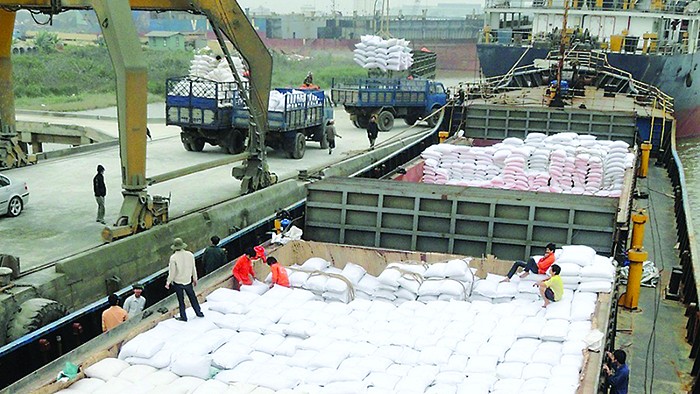


The Ministry of Industry and Trade has just received a report from the Vietnam Trade Office in the Philippines on the fact that the Ministry of Agriculture of this country has published a draft Circular on "Food safety management measures for rice".
Mr. Nguyen Trung Kien, Vice Chairman of the Vietnam Food Association, said that the Philippines tightened the management of food safety for rice products co-ordinated by the Ministry of Industry and Trade and the Ministry of Agriculture and Rural Development to work together. with the Government of the Philippines.
Philippines tightens the quality of imported rice
The Philippines is the largest rice importer in the world and the No. 1 market of Vietnamese rice exports. In 2019, the Philippines imported 2.9 million tons of rice, of which, imports from Vietnam reached 2,132 million tons, worth US $ 885 million, accounting for 73.44% of the country's total rice import volume.
In 2020, the Philippines is expected to import about 2.5 million tons.
In June 2020, the amount of rice exported to the Philippines was 87,828 thousand tons, reaching a turnover of US $ 42,768 million, compared to the same period in 2019, down 44.62% in volume and 34.9% in turnover.
Accumulated 6 months, exports to the Philippines reached 1.376 million tons of rice, worth $ 634.26 million, over the same period increased 12.89% in volume and 30.06% in turnover.
Mr. Tran Tuan Kiet, Deputy General Director of Dung Nam Import Export Service Trading Co., Ltd, said that the Philippines is the leading export market of Vietnamese rice, and although Filipino consumers are very fond of Vietnamese rice, when The country has erected a food safety barrier that will be a major obstacle for exporters.
These standards are similar to those previously set by China for Vietnamese rice, and as such, it is difficult for Vietnamese enterprises to continue exporting stable rice to the Philippines in large quantities. like nowadays.
“Based on the food safety standards in the Philippines circular sent to Vietnam, it shows that the country is tightening on the quality of imported rice. With the provisions of the circular, perhaps only large enterprises can survive, and small and medium enterprises will be difficult to adapt.
In early 2020, the Philippines intended to send the delegation to Vietnam to reality check on food safety issues at the rice enterprises' factories, but due to the outbreak of the Covid-19 epidemic, this plan was halted. when the disease is stable, they will send delegations to. It is possible that the Philippines will learn from China to only grant rice export licenses to businesses with processing plants that fully meet their food safety standards, ”Kiet said.
Hit the pocket of Philippine consumers
According to an expert in rice market analysis, the Philippines government erecting technical barrier with imported rice quality sounds like protecting the interests of Filipino consumers. However, in principle, Vietnamese rice before export is assessed by independent inspection agencies for all food safety standards, because all these issues are in the contract content. signed between rice importer and exporter. The choice of an independent auditor is subject to agreement between the buyer and seller.
Being in ASEAN but Malaysia and Indonesia - the two major rice import markets do not set any food safety standards for rice imported into their countries, but the Philippines has set up technical barriers for rice. Accidentally causing difficulties for Vietnamese businesses.
It is also not excluded that the Government of the Philippines wants to erect barriers to restrict the volume of imported rice to protect domestic production. However, in fact, domestic production is not enough for domestic consumption and the price of rice made by Filipino farmers is much higher than the price of rice imported from Vietnam.
According to the above expert, currently the Philippines is very short of rice, if you do not buy Vietnamese rice, you can not buy rice from any other country, because there is no source that is both delicious and very competitive price like Vietnamese rice. .
Besides, Vietnamese rice is very popular with Filipino consumers and is very competitive, the fact that the Philippine Government erected technical barriers inadvertently caused the cost of importing rice and Philippine consumers to bear.
“If the Philippines tightens food safety standards for rice, all rice exporting countries in the Philippines will be affected because there must be a series of additional costs that increase retail prices.
For Vietnamese rice, exports to the Philippines are very competitive prices if increasing costs, consumers can still accept. The Philippine government's setting up barriers to imported rice is hitting the pockets of the people of their country, and will greatly affect the amount of Vietnamese rice exported to Vietnam, ”the expert said.
Source: https://bom.to/5bPa5y

Other posts

tong-quan-thi-truong-gao-tuan-nay-cap-nhat-viet-nam-thi-truong-toan-cau-tuan-4-thang-12026

Weekly Rice Market Recap: Vietnam & Global Market Insights (W4 January 2026)

Weekly rice market update covering Vietnam and global developments, including export policies, pricing trends, and key insights for rice importers and traders.

cap-nhat-thi-truong-gao-viet-nam-gia-gao-dong-bang-song-cuu-long-on-dinh-truoc-tet

Vietnam Rice Market Update: Mekong Delta Rice Prices Remain Stable Ahead of Lunar New Year

Vietnam rice prices today, Jan 28, remain stable across the Mekong Delta as trading activity slows ahead of the Lunar New Year. High-quality rice such as OM 18 continues to lead the market.

viet-nam-chu-dong-giam-xuat-khau-gao-tu-nam-2026-dieu-nay-co-y-nghia-gi-voi-thi-truong

Vietnam to Proactively Reduce Rice Exports from 2026: What This Means for the Global Market

Vietnam plans to reduce rice exports from 2026 as part of a strategic shift toward higher value and quality.

cuoc-chien-gia-gao-toan-cau-nam-2026-nhung-dieu-nha-xuat-khau-va-nguoi-mua-can-biet

Global Rice Price Competition in 2026: What Exporters and Buyers Need to Know

The 2026 global rice price war is reshaping export strategies and buyer decisions amid rising competition and shifting supply dynamics.

trien-vong-moi-cho-gao-phat-thai-thap-va-loi-the-xuat-khau-ben-vung-cua-viet-nam

New Prospects for Low-Emission Rice and Vietnam’s Green Export Advantage

Vietnam’s low-emission rice project is reshaping the rice sector through sustainable farming, higher profits, and stronger export competitiveness. Discover how enterprises like Cam Rice are positioned to lead the next phase of green rice exports.

thi-truong-gao-xuat-khau-viet-nam-2025-ap-luc-gia-dich-chuyen-nhu-cau-va-co-hoi-chien-luoc

Vietnam’s Rice Export Prices Under Strong Year-End Pressure: Market Outlook 2025–2026

Vietnam’s rice export prices fell to 509 USD per tonne in the first nine months of 2025 as global supply increases and demand softens. Read the full market analysis and opportunities for premium rice exporters.

vietnam-ra-mat-tieu-chuan-gao-it-phat-thai-thuc-day-san-xuat-ben-vung

Vietnam Introduces Low-Emission Rice Standards Boosting Sustainable Production

Vietnam launches its first MRV process for low-emission rice, boosting sustainable production, premium quality, and export opportunities.

gao-st25-cua-viet-nam-lan-thu-3-dat-danh-hieu-gao-ngon-nhat-the-gioi-cung-co-vi-the-gao-cao-cap

Vietnam’s ST25 Rice Wins World’s Best Rice 2025 | Vietnam’s Premium Rice Reinforced on the Global Stage

Vietnam’s ST25 rice wins the World’s Best Rice title for the third time, reaffirming Vietnam’s leadership in premium rice innovation and global trade.

singapore-viet-nam-ky-ket-ban-ghi-nho-hop-tac-thuong-mai-gao-br-tang-cuong-an-ninh-luong-thuc-k

Singapore and Vietnam Sign Rice Trade Memorandum:
Strengthening Food Security and Regional Supply Chains

Singapore and Vietnam signed their first MOC on rice trade, enhancing regional food security and opening new opportunities for Vietnamese rice exporters.

cap-nhat-cuoi-2025-philippines-siet-gia-gao-trong-thoi-gian-tam-ngung-nhap-khau

Late 2025 Update: Philippines Tightens Rice Price Controls Amid Ongoing Import Ban

The Philippines continues to enforce rice price controls while maintaining its import ban through late 2025. Retail monitoring in Metro Manila and key markets signals ongoing volatility as the government holds the 43-peso price cap.

Call  Zalo SMS  Direct