


Improving quality
According to the statistics by the Ministry of Agriculture and Rural Development (MARD), from the beginning of this year to now, amid the context of the complicated Covid-19 pandemic in the world, rice export is still considered the brightest spot of Vietnam, with an export volume of up to 4.5 million tons, worth US$2.2 billion, down 1.7 percent in volume but up 10.4 percent in value over the same period last year. Of these, white rice accounted for 45.2 percent of total rice exports; jasmine and fragrant rice 36.6 percent; sticky rice 13.7 percent; japonica and Japanese rice varieties 4.5 percent.
Vietnam currently has fragrant rice varieties with an export price of more than $1,000 per ton, sometimes even surpassing those of Thailand. It is forecast that rice prices will continue to increase in the coming time, which is a good signal for Vietnamese rice products and farmers.
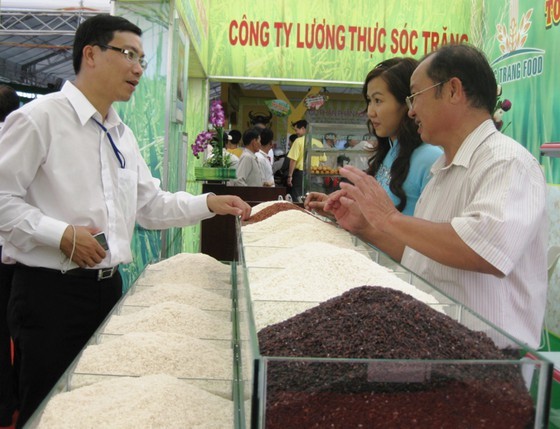
In the domestic market, consumers used to prefer Thai rice, in recent years, various types of Vietnamese high-quality fragrant rice are increasingly consumed by domestic consumers. The prices of fragrant, specialty, and jasmine rice range from VND22,000 to VND50,000 per kilogram.
Especially, after Vietnam's ST25 rice won the title of "World's Best Rice", there has been a hunt for this type of rice in the domestic market from the end of 2019 until now. Because at the time of winning the award, ST25 rice was just a pilot product, so it could not meet the domestic demand.
Dr. Dang Kim Son, former Director of the Institute of Policy and Strategy for Agriculture and Rural Development, said that rice is one of the most successful commodities in recent years. The quality of rice is also changing and improving day by day.
Many reasons led to the above successes, including well-invested irrigation systems to serve rice production, good processing and storage systems, and mechanization in rice production. Along with that, farmers are always willing to acquire and apply scientific and technical achievements in rice farming.
In the export of rice, Vietnam is facing cutthroat competition from Thailand, India, and Cambodia. Therefore, if the quality of Vietnamese rice is not good, Vietnamese rice will certainly not get as impressive export results as it did over the past time. However, for Vietnamese rice to increasingly assert its prestige and brand in the international market and create many advantages in competition, besides the fact that farmers must fully apply scientific-technical achievements, regulations, and standards to production, the State also needs to have specific preferential and incentive mechanisms and policies to support farmers and the rice industry, including interest rate support for bank loans, so that farmers, enterprises, and cooperatives can invest in purchasing machinery and equipment for the rice production and processing activities for export.
Building brand
Five years ago, the country had a project to develop Vietnam's rice brand to 2020 with a vision to 2030. In 2018, for the first time, Vietnam had a national rice brand name after participating in the export market for many years. Currently, the Vietnamese rice brand has already carried out procedures for international protection. However, after more than two years of having a logo, this brand merely stops at the promulgation of regulations on using the national rice certification mark for organizations and individuals and using for white rice, fragrant white rice, and white sticky rice. To carry the national rice brand, enterprises must satisfy many standards, such as international food standards, global standards for food safety, or the ISO 22000 food safety management system.
In fact, when Vietnamese rice is exported to some markets requiring high quality, it often encounters some risks regarding quality and technical standards, especially in the US market, so, in terms of sentiment, enterprises are remaining cautious. This time, with the EVFTA, if the rice production manages to meet all EU technical standards, rice products will be able to sell to the US market and maintain stability. It is also an opportunity for enterprises to continue investing. Thus, the EU market can be considered as the starting point for Vietnamese rice to enter other high-quality markets. Once accepted by the EU market, it will help to establish and strengthen the Vietnamese rice brand.
According to some exporting enterprises, the application of national rice standards must emphasize the traceability, raw material growing areas, and good agricultural practices, then the producers and exporters will have even quality. Timely identification of difficulties and challenges in rice production and rice export also helps farmers and enterprises to avoid risks, contributing to the promotion of comprehensive development of Vietnam's agricultural sector, including rice.
According to the statistics by the Ministry of Agriculture and Rural Development (MARD), from the beginning of this year to now, amid the context of the complicated Covid-19 pandemic in the world, rice export is still considered the brightest spot of Vietnam, with an export volume of up to 4.5 million tons, worth US$2.2 billion, down 1.7 percent in volume but up 10.4 percent in value over the same period last year. Of these, white rice accounted for 45.2 percent of total rice exports; jasmine and fragrant rice 36.6 percent; sticky rice 13.7 percent; japonica and Japanese rice varieties 4.5 percent.
Vietnam currently has fragrant rice varieties with an export price of more than $1,000 per ton, sometimes even surpassing those of Thailand. It is forecast that rice prices will continue to increase in the coming time, which is a good signal for Vietnamese rice products and farmers.
In the domestic market, consumers used to prefer Thai rice, in recent years, various types of Vietnamese high-quality fragrant rice are increasingly consumed by domestic consumers. The prices of fragrant, specialty, and jasmine rice range from VND22,000 to VND50,000 per kilogram.
Especially, after Vietnam's ST25 rice won the title of "World's Best Rice", there has been a hunt for this type of rice in the domestic market from the end of 2019 until now. Because at the time of winning the award, ST25 rice was just a pilot product, so it could not meet the domestic demand.
Dr. Dang Kim Son, former Director of the Institute of Policy and Strategy for Agriculture and Rural Development, said that rice is one of the most successful commodities in recent years. The quality of rice is also changing and improving day by day.
Many reasons led to the above successes, including well-invested irrigation systems to serve rice production, good processing and storage systems, and mechanization in rice production. Along with that, farmers are always willing to acquire and apply scientific and technical achievements in rice farming.
In the export of rice, Vietnam is facing cutthroat competition from Thailand, India, and Cambodia. Therefore, if the quality of Vietnamese rice is not good, Vietnamese rice will certainly not get as impressive export results as it did over the past time. However, for Vietnamese rice to increasingly assert its prestige and brand in the international market and create many advantages in competition, besides the fact that farmers must fully apply scientific-technical achievements, regulations, and standards to production, the State also needs to have specific preferential and incentive mechanisms and policies to support farmers and the rice industry, including interest rate support for bank loans, so that farmers, enterprises, and cooperatives can invest in purchasing machinery and equipment for the rice production and processing activities for export.
Building brand
Five years ago, the country had a project to develop Vietnam's rice brand to 2020 with a vision to 2030. In 2018, for the first time, Vietnam had a national rice brand name after participating in the export market for many years. Currently, the Vietnamese rice brand has already carried out procedures for international protection. However, after more than two years of having a logo, this brand merely stops at the promulgation of regulations on using the national rice certification mark for organizations and individuals and using for white rice, fragrant white rice, and white sticky rice. To carry the national rice brand, enterprises must satisfy many standards, such as international food standards, global standards for food safety, or the ISO 22000 food safety management system.
In fact, when Vietnamese rice is exported to some markets requiring high quality, it often encounters some risks regarding quality and technical standards, especially in the US market, so, in terms of sentiment, enterprises are remaining cautious. This time, with the EVFTA, if the rice production manages to meet all EU technical standards, rice products will be able to sell to the US market and maintain stability. It is also an opportunity for enterprises to continue investing. Thus, the EU market can be considered as the starting point for Vietnamese rice to enter other high-quality markets. Once accepted by the EU market, it will help to establish and strengthen the Vietnamese rice brand.
According to some exporting enterprises, the application of national rice standards must emphasize the traceability, raw material growing areas, and good agricultural practices, then the producers and exporters will have even quality. Timely identification of difficulties and challenges in rice production and rice export also helps farmers and enterprises to avoid risks, contributing to the promotion of comprehensive development of Vietnam's agricultural sector, including rice.
Source: https://sggpnews.org.vn/business/vietnamese-rice-needs-longterm-strategy-89001.html


 Call
Call Zalo
Zalo SMS
SMS Direct