


Opportunity for Vietnam to export rice to Australia
Opportunity for Vietnam to export rice to Australia
SunRice CEO Rob Gordon, head of Australia’s largest rice supplier, has announced that Australia is suffering a massive shortage of domestic rice supplies and would be forced to rely on imported Vietnamese rice in the lead up to Christmas 2020.
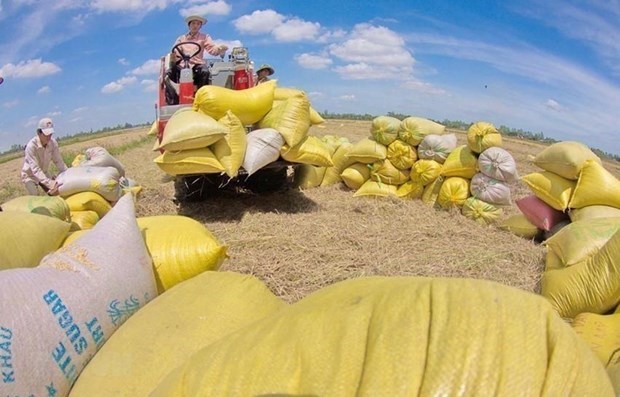
Sydney (VNA) - SunRice CEO Rob Gordon, head of Australia’s largest rice supplier, has announced that Australia is suffering a massive shortage of domestic rice supplies and would be forced to rely on imported Vietnamese rice in the lead up to Christmas 2020.
In an article posted on the website australiavietnam.org, James Fairley of the Australia – Vietnam Young Leadership Dialogue wrote that these announcements emphasise nuances (and fear) of the growing economic fallout of COVID-19, compounded by the impacts of climate change on Australian domestic production. Perhaps more broadly however, such a shortage represents yet another opportunity for Australia in the face of growing calls for trade diversification and integration with new markets.
Australia’s rice market
According to the article, Australia’s rice production remains highly variable due to changing water availability and prices of alternative crops, amounting to merely 0.4 percent of total anticultural production value between 2017-2018. According to the Australian Bureau of Agricultural and Resource Economics and Sciences (ABARES) and the Australian Bureau of Statistics (ABS) 2019-2020 crop yielded about 57,000 tonnes of rice and is, weather permitting, forecast to reach 266,000 tonnes in 2020-2021. This remains well below the 10-year average to 2018-2019 of 629,000 tonnes.
In any event, ABARES predicts that “fundamental changes in demand for water and relatively low returns for rice production mean that Australia is likely to grow less rice” and turn crops like cotton which have benefited from technological developments and benefited most from the US-China trade dispute.
Founder and Managing Director of agribusiness firm Lefarm Co. Ltd and AVYLD alumni Nguyen Le agrees, stating that “It is a natural movement towards importing more instead of producing more...the real question is, will Australia focus on importing out of necessity, or on forming sustainable long-term strategy to share and co-develop innovations with Vietnam to better align demand and supply when time comes?”
Australians consume about 300,000 tonnes of rice annually, with imports accounting for about half of all consumption – an average of 173,000 tones between 2009-2010 and 2018-2019. Most rice imports are from long grain rice producing countries like Vietnam, Thailand, Pakistan and India, with import’s providing more stable production as opposed to Australian variable domestic production levels.
Australian domestic production variability of rice, particularly in the 2019-2020 crop yield, highlights the increasing demand for alleviation of shortages by imports. As ABARES suggests, in the short term (and given the 2019-2020 yield deficit as above), since domestically produced rice is harvested in autumn - once per year - no new domestic supply will be available in Australia until 2021. Any shortages can only be alleviated via imports.
Vietnam’s rice exports
Vietnam is a key producer and exporter of rice globally and has significantly increased production and exports year on-year, meeting increasing global demand. According to Business Monitor International (BMI), Vietnamese rice exports rose by 30 percent year-on-year in the 2016-2017 harvest due to strong demand by China, the Philippines and Indonesia.
Exports are forecast to continue to rise from 6.1 million tonnes in 2020 to more than 7.86 million tonnes by 2023-2024. This may be driven by Vietnam’s price competitiveness against regional neighbours like Thailand, underscored by Vietnamese government intentions to increase hybrid rice variety production by 50 percent, bolstering future production and export capabilities.
Unlike its neighbours and competitors like Thailand, Vietnam enjoys elevated rice yields as a result of the governments past crop intensification policy, which encouraged farmers to skip crop rotation to maximise production annually.
Nevertheless, Vietnam remains challenged by the increasing water levels in the Mekong Delta, driven by climate change and its impact on soil conditions. These are compounded by issues with sorting and grading, and storage of rice.
Bipartisan calls for trade diversification
Australia’s rice deficit and the growing viability of enhanced trade in rice with Vietnam are strengthened by growing socio-political sentiment about strategic reliance and trade imbalances brought about by the economic consequences of COVID-19.
The impact of a halt to globalisation and economic interconnection (whether through border closures, localised shutdowns of manufacturing and exporting or otherwise) has accelerated calls for a rethink about who, why and what Australia partners with, in trade and innovation.
There are calls for Australia to look beyond its traditional partners in China, Japan, the United States and the Republic of Korea (who together account for 55.5 percent of Australian trade) and towards “growing regions that complement Australian goods, services and expertise, which offer significant potential to diversify”.
Opportunities with Vietnam
Indeed, Australia can expand its relations with Vietnam by driving meaningful mutually beneficial improvements in this industry. Canberra can drive new partnerships in innovation, leveraging institutional knowledge in the Commonwealth Scientific and Industrial Research Organisation (CSIRO), ABARES and others to aide Vietnamese rice export quality and growth to Australia. These Departments can concurrently strengthen existing policy agendas in rice by other Departments like the Australian Centre for International Agricultural Research (ACIAR).
Concurrently, Canberra can support Australian farmers to transition to crops benefiting most from technology like cotton – a sector which has benefited greatly from the US-China trade dispute and a fast-growing import for Vietnam.
In the end, Australia should not view imports from Vietnam as a last resort, but an opportunity for the forging of longer term meaningful links with emerging partners for both countries' sake./.
Source: https://en.vietnamplus.vn/opportunity-for-vietnam-to-export-rice-to-australia/188979.vnp
Other posts

Weekly Rice Market Recap: Vietnam & Global Market Insights (W4 January 2026)
Weekly rice market update covering Vietnam and global developments, including export policies, pricing trends, and key insights for rice importers and traders.

Vietnam Rice Market Update: Mekong Delta Rice Prices Remain Stable Ahead of Lunar New Year
Vietnam rice prices today, Jan 28, remain stable across the Mekong Delta as trading activity slows ahead of the Lunar New Year. High-quality rice such as OM 18 continues to lead the market.

Vietnam to Proactively Reduce Rice Exports from 2026: What This Means for the Global Market
Vietnam plans to reduce rice exports from 2026 as part of a strategic shift toward higher value and quality.

Global Rice Price Competition in 2026: What Exporters and Buyers Need to Know
The 2026 global rice price war is reshaping export strategies and buyer decisions amid rising competition and shifting supply dynamics.

New Prospects for Low-Emission Rice and Vietnam’s Green Export Advantage
Vietnam’s low-emission rice project is reshaping the rice sector through sustainable farming, higher profits, and stronger export competitiveness. Discover how enterprises like Cam Rice are positioned to lead the next phase of green rice exports.

Vietnam’s Rice Export Prices Under Strong Year-End Pressure: Market Outlook 2025–2026
Vietnam’s rice export prices fell to 509 USD per tonne in the first nine months of 2025 as global supply increases and demand softens. Read the full market analysis and opportunities for premium rice exporters.

Vietnam Introduces Low-Emission Rice Standards Boosting Sustainable Production
Vietnam launches its first MRV process for low-emission rice, boosting sustainable production, premium quality, and export opportunities.

Vietnam’s ST25 Rice Wins World’s Best Rice 2025 | Vietnam’s Premium Rice Reinforced on the Global Stage
Vietnam’s ST25 rice wins the World’s Best Rice title for the third time, reaffirming Vietnam’s leadership in premium rice innovation and global trade.

Singapore and Vietnam Sign Rice Trade Memorandum:
Strengthening Food Security and Regional Supply Chains
Singapore and Vietnam signed their first MOC on rice trade, enhancing regional food security and opening new opportunities for Vietnamese rice exporters.

Late 2025 Update: Philippines Tightens Rice Price Controls Amid Ongoing Import Ban
The Philippines continues to enforce rice price controls while maintaining its import ban through late 2025. Retail monitoring in Metro Manila and key markets signals ongoing volatility as the government holds the 43-peso price cap.
 Call
Call Zalo
Zalo SMS
SMS Direct